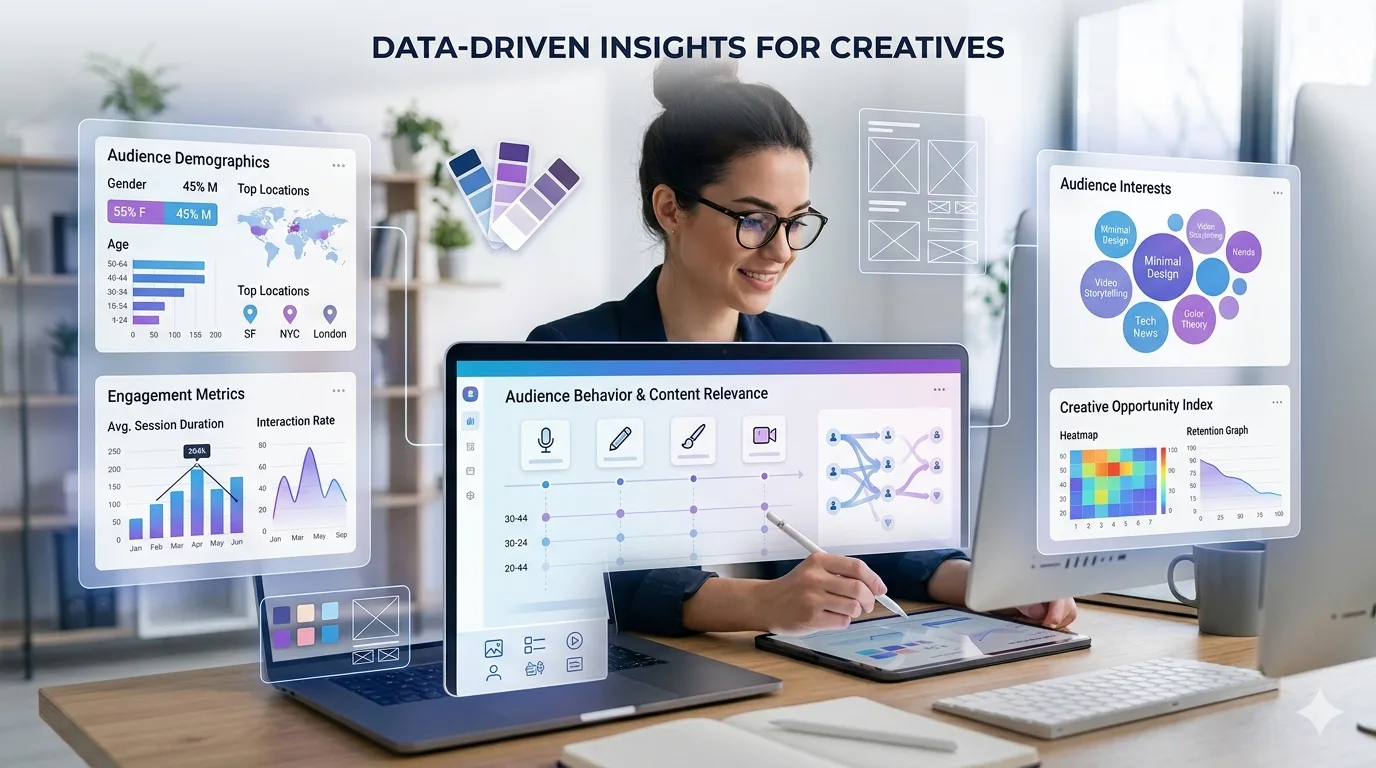

You pour your heart into your creative work. You stay up late, revise endlessly, and finally share it with the world. Then comes the waiting. Will anyone care? Will they understand what you're trying to say? Will they share it, buy it, or just scroll past?
For most creatives, that uncertainty is just part of the job. You create, you hope, and you move on to the next project. But what if you didn't have to guess? What if you could actually know what your audience thinks, feels, and wants?
That's what data makes possible.
Many creatives focus only on producing great work, but understanding who is actually engaging with what you make helps you create more of what resonates and less of what doesn't. Learning how to interpret and use this information is easier when you understand why creatives should learn data analysis and how data can guide smarter creative decisions.
This article focuses specifically on one of the most valuable applications of data: understanding your audience. Not as a faceless crowd, but as real people with real preferences, behaviors, and needs.
2. Why Understanding Your Audience Matters
Before we dive into the how, let's talk about the why.
The Problem with Assumptions
Every creative makes assumptions about their audience. You assume you know who likes your work, why they like it, and what they want next. But assumptions are often wrong.
A painter might assume their buyers are local art collectors when data shows most sales come from out-of-state online shoppers. A writer might assume readers want practical advice when comments reveal they connect most with personal stories. A musician might assume their fans are young when streaming data shows the biggest listeners are over forty.
Assumptions create blind spots. Data removes them.
What Happens When You Truly Understand Your Audience
When you know who your audience is and what they actually value, you can:
- Create work they'll genuinely love because you're not guessing what resonates
- Communicate in ways they appreciate using language and channels that actually reach them
- Show up where they already are rather than hoping they find you
- Serve them more meaningfully by addressing their real needs and interests
- Build loyalty and connection because people feel seen and understood
Many creatives worry that using data will make their work feel calculated, but the opposite is true. When you understand your audience, you can serve them better without losing your creative voice. Learning why creatives should learn data analysis reveals that data doesn't replace intuition it gives you the clarity to trust it.
3. What Data Reveals About Your Audience
Different types of data tell you different things about the people who engage with your work.
Demographics: Who They Are
Demographic data tells you the basic characteristics of your audience:
- Age range
- Gender
- Location (country, city, sometimes even neighborhood)
- Language
- Income level (on some platforms)
This information helps you understand who you're actually reaching versus who you assumed you were reaching. A ceramic artist might discover that half their online sales go to buyers in a different country, opening opportunities for international shipping or targeted marketing.
Behaviors: What They Do
Behavioral data shows how people actually interact with your work:
- What they click on and what they ignore
- How long they spend looking at your work
- Where they drop off or lose interest
- What they do after engaging with your content
- How often they return
This is often the most valuable data because it reveals what people actually do, not just what they say they do. A YouTuber might discover that viewers consistently stop watching at the two-minute mark, revealing a problem with pacing or content structure.
Engagement: What Resonates
Engagement data shows what your audience truly values:
- Which posts, songs, or pieces get the most likes, comments, and shares
- What topics generate discussion
- What formats perform best (video vs. text, short vs. long)
- What times and days get the strongest response
These patterns reveal what your audience wants more of. A writer might notice that personal essays consistently outperform how-to articles, suggesting readers connect with vulnerability and storytelling over practical advice.
Feedback: What They Say
Direct feedback comments, messages, reviews, survey responses tells you why people feel the way they do. Numbers tell you what's happening. Words tell you why.
A designer might see low engagement on a portfolio piece. The numbers show the problem. A comment like "beautiful but I don't understand what you do" reveals the solution.
4. Where to Find Audience Data
You don't need expensive tools or technical skills. Most audience data is already available in platforms you use every day.
Social Media Insights
- Instagram Insights shows follower demographics, when your audience is most active, and which posts perform best
- YouTube Studio provides detailed audience age, location, and watch time data
- TikTok Analytics reveals follower growth, video performance, and audience activity times
- Facebook Insights offers comprehensive audience demographics and engagement data
Platform-Specific Tools
- Spotify for Artists shows listener demographics, top cities, and which songs resonate most
- Medium Stats reveals reader age, location, and which stories keep people reading
- Substack Analytics shows subscriber growth and which posts drive engagement
- Etsy Stats tells you where buyers come from and what they're searching for
Website Analytics
- Google Analytics (free) provides detailed audience location, behavior, and content performance data
- Simple Analytics offers privacy-friendly visitor insights
Direct Feedback
- Comments and messages on your posts and platforms
- Surveys using free tools like Google Forms or Typeform
- Email replies from your newsletter subscribers
Many creatives feel overwhelmed by all this data, but you don't need to track everything at once. Understanding why creatives should learn data analysis helps you focus on what actually matters for your goals rather than getting lost in every available number.
5. How to Analyze Audience Data
Collecting data is one thing. Making sense of it is another. Here's a simple approach.
Start with One Question
Don't try to analyze everything at once. Pick a single question you want answered:
- "Who is actually looking at my work?"
- "What type of content gets the most engagement?"
- "When is my audience most active?"
- "Where do my followers live?"
A clear question focuses your analysis and prevents overwhelm.
Look for Patterns Over Time
Single data points can be misleading. One viral post doesn't define your audience. One quiet week doesn't mean you've lost them. Look for patterns across weeks or months. Trends reveal truth; outliers reveal anomalies.
Segment Your Audience
Your audience isn't one homogeneous group. Break them into segments:
- New vs. returning visitors
- Different age groups or locations
- People who engage with different types of content
You might discover that your email subscribers love long-form content while your Instagram followers prefer quick tips. That's useful information.
Combine Numbers with Words
Quantitative data tells you what's happening. Qualitative data tells you why. If engagement drops, look at comments and messages for clues. If a piece performs unexpectedly well, read what people are saying about it.
Create Audience Personas
Based on what you learn, create simple profiles of your typical audience members. Give them names, characteristics, and preferences. This helps you design for real people rather than abstract data.
6. Turning Insights into Action
Data is only valuable if you do something with it. Here's how to turn audience insights into practical action.
Create More of What Works
If data shows that certain topics, formats, or styles consistently perform well, create more in that direction. This doesn't mean abandoning your creative vision. It means focusing your energy on what your audience already loves about your work.
Adjust Your Timing
If your audience is most active on Sunday mornings, post then. If they engage more on weekdays after work, schedule accordingly. This simple change can dramatically increase reach without changing your content at all.
Refine Your Messaging
Use the language your audience uses. If comments reveal specific words or phrases that resonate, incorporate them into your descriptions, emails, and social posts. Speak their language.
Test and Iterate
Make one small change based on your insights. See what happens. Did engagement increase? Did you reach new people? Did anything unexpected occur? Use those results to inform your next move.
Let Go of What Doesn't Work
Data also tells you what to stop doing. If a certain type of content consistently underperforms, consider whether it's worth the time and energy. Sometimes letting go creates space for what truly matters.
Many creatives worry that acting on data means selling out, but the opposite is true. Learning why creatives should learn data analysis shows you how to serve your audience better while staying true to your creative voice. Data doesn't dictate it informs.
7. Real-World Examples
Here's how creatives across different fields use data to understand their audience.
The Illustrator Who Discovered Her True Fans
An illustrator assumed her audience was other artists interested in technique. Her Instagram Insights told a different story. Her followers were mostly non-artists who loved her whimsical characters and color palettes. She shifted her content from tutorials to behind-the-scenes process videos and personality-driven posts. Engagement doubled, and she began selling prints to people who simply enjoyed her work rather than wanting to learn from it.
The Writer Who Found His Readers
A freelance writer was producing general business content. His analytics showed that articles about productivity and creative work received significantly more reads and shares than other topics. He pivoted his focus to writing specifically for creatives and entrepreneurs. Within six months, his email list grew from 500 to 5,000, and he landed a regular column with a major publication.
The Musician Who Planned Her Tour
An indie musician looked at her Spotify for Artists data and discovered her listeners were concentrated in three cities she'd never considered playing. She booked small shows in those cities, promoted locally using targeted ads, and sold out all three venues. She built dedicated fan bases in places she never expected to have a following.
The Podcaster Who Improved Retention
A podcaster noticed through her hosting platform that listeners consistently dropped off around the 25-minute mark. She experimented with shorter episodes and more engaging segment transitions. Retention improved significantly. She also discovered through listener emails that her audience preferred deep-dive interviews over solo episodes, so she adjusted her format accordingly.
8. Common Mistakes to Avoid
As you begin using data to understand your audience, watch out for these pitfalls.
Mistake 1: Focusing on Vanity Metrics
Follower counts and likes feel good but don't always matter. Focus on metrics that connect to your actual goals engagement, sales, email signups, return visitors, or whatever matters for your creative practice.
Mistake 2: Overreacting to Small Samples
One great post doesn't define your audience. One bad week doesn't mean you've lost them. Look for patterns over time before making significant changes.
Mistake 3: Ignoring Context
Data without context is misleading. A drop in engagement might mean your content is declining in quality or it might mean you posted during a major holiday when everyone was offline. Always consider what else was happening.
Mistake 4: Trying to Please Everyone
Your data will reveal different preferences among different audience segments. You can't please everyone. Focus on the audience that matters most to your goals and serve them well.
Mistake 5: Letting Data Override Your Instincts
Data informs. It doesn't dictate. If the numbers suggest one direction but your creative intuition strongly disagrees, trust yourself. The best decisions combine evidence with experience.
9. Conclusion
Understanding your audience isn't about manipulation or chasing trends. It's about serving real people better. When you know who they are, what they value, and how they behave, you can create work that truly resonates.
Many creatives focus only on producing great work, but understanding who is actually engaging with what you make helps you create more of what resonates and less of what doesn't. Learning why creatives should learn data analysis gives you the tools to understand your audience without losing your creative voice.
Start small. Pick one platform. Ask one question about your audience. Look for one pattern. Make one small change based on what you learn.
You might be surprised how much clarity a little audience data can bring and how much stronger your connection with your audience becomes when you stop guessing and start understanding.